
Discovery
Identify material interactions and process limits worth investigating.
EVABIO × PoliNb⁴¹
A proposed polymeric intermediate designed to bring identified niobium products into controlled polymer-development pathways.
The category is being defined by composition, dispersion, pellet integrity, reproducible processing, function in a host polymer and traceability. Performance and commercial readiness remain subject to validation.
The central idea
Niobium remains niobium. Niobium pentoxide remains a chemical compound. PoliNb⁴¹ is the proposed industrial identity created when an identified niobium product and a specific compatibilizing polymer matrix are developed together as a dosable intermediate material.
The ambition is to make the intermediate itself definable and reproducible before asking what it can do inside a final host polymer.
A clear path to understanding
Each level adds industrial meaning without erasing the chemistry underneath it. This distinction is essential for technical communication, testing and future IP strategy.

Engineering hypothesis
The matrix is intended to participate as more than passive support: as a polymeric vehicle, compatibility pathway, particle-wetting or encapsulation medium and functional contributor. These roles require formulation-specific evidence.
Where the program stands
Development records support preliminary incorporation and processability observations. They do not yet establish a final pellet specification, universal compatibility, superior application performance, industrial scalability or commercial readiness.
Identify material interactions and process limits worth investigating.
Reproduce a selected formulation with traceable inputs, records and retained samples.
Define pellet integrity, composition, morphology, handling and processing window.
Generate qualified data against application-specific controls and methods.
Connect quality, economics, scale, safety and partner requirements.
Physical samples and development records justify continued investigation within the limits of the methods used.
A controlled intermediate may help transfer a more uniform niobium distribution into a host-polymer part. Comparative testing is required.
Application benefits, high-load reproducibility, broad compatibility and industrial production remain to be demonstrated.
Potential industrial contribution
PoliNb⁴¹ is not positioned as a universal answer. It is a development platform for turning broad possibilities into controlled, application-specific questions.

Investigate whether an industrial solid form can improve feeding, containment, sampling and lot traceability.
Connect composition and morphology in the pellet with distribution in the final host polymer.
Define the property, baseline, method and acceptance criterion required by each application owner.
Evaluate recycled-polymer use, durability, future recyclability, material safety and carbon implications against a defined baseline.
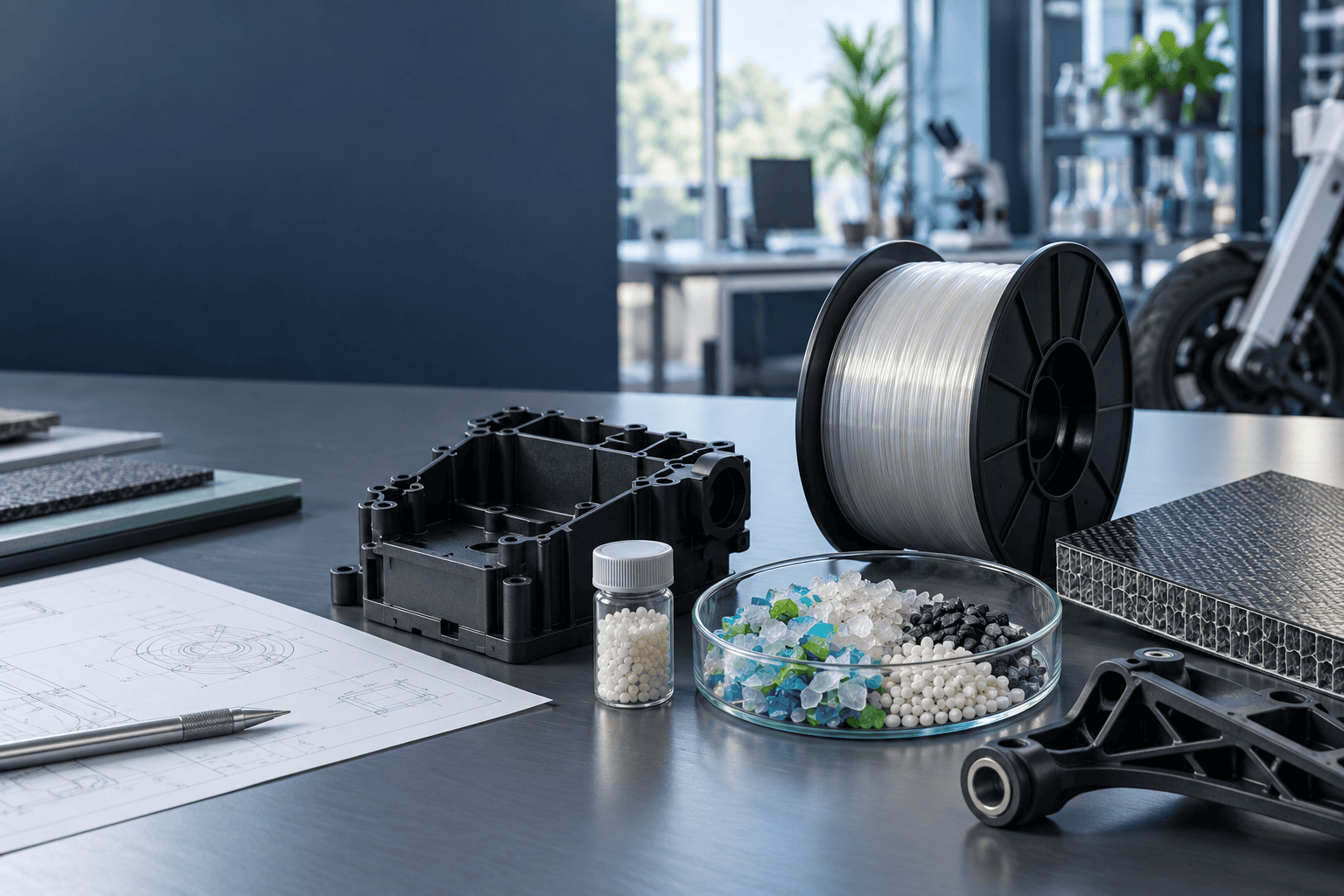
Candidate pathways include engineering polymers, recycled systems, technical textiles, mobility and other demanding polymer contexts. Each requires its own formulation, processing route and validation plan.
Built as an ecosystem
The opportunity becomes credible when material knowledge, polymer technology, processing, independent measurement, application ownership, IP discipline and capital meet at clearly defined gates.
Provide grade and lot identity, certificates, safety information and application knowledge.
Define the specific functional matrix, its processing window and authorized use within the project.
Convert hypotheses into traceable batches with controlled mass balance and process records.
Measure composition, morphology, thermal behavior, mechanics and other application-relevant attributes.
Define the real problem, host polymer, controls, operating conditions and success criteria.
Fund the next measurable gate while protecting confidentiality, ownership, data and future licensing options.
Leadership and continuity
Inventorship for future claims is determined by contribution to the claimed subject matter and applicable law, not by title, funding or participation alone.
The next measurable gate
EVABIO is building controlled pathways for materials, processing, testing, application insight and strategic support. Every collaboration begins with scope, confidentiality and a question that can be measured.
EVABIO × PoliNb⁴¹
A proposed polymeric intermediate designed to bring identified niobium products into controlled polymer-development pathways.
The category is being defined by composition, dispersion, pellet integrity, reproducible processing, function in a host polymer and traceability. Performance and commercial readiness remain subject to validation.
The central idea
Niobium remains niobium. Niobium pentoxide remains a chemical compound. PoliNb⁴¹ is the proposed industrial identity created when an identified niobium product and a specific compatibilizing polymer matrix are developed together as a dosable intermediate material.
The ambition is to make the intermediate itself definable and reproducible before asking what it can do inside a final host polymer.
A clear path to understanding
Each level adds industrial meaning without erasing the chemistry underneath it. This distinction is essential for technical communication, testing and future IP strategy.
Engineering hypothesis
The matrix is intended to participate as more than passive support: as a polymeric vehicle, compatibility pathway, particle-wetting or encapsulation medium and functional contributor. These roles require formulation-specific evidence.
Where the program stands
Development records support preliminary incorporation and processability observations. They do not yet establish a final pellet specification, universal compatibility, superior application performance, industrial scalability or commercial readiness.
Identify material interactions and process limits worth investigating.
Reproduce a selected formulation with traceable inputs, records and retained samples.
Define pellet integrity, composition, morphology, handling and processing window.
Generate qualified data against application-specific controls and methods.
Connect quality, economics, scale, safety and partner requirements.
Physical samples and development records justify continued investigation within the limits of the methods used.
A controlled intermediate may help transfer a more uniform niobium distribution into a host-polymer part. Comparative testing is required.
Application benefits, high-load reproducibility, broad compatibility and industrial production remain to be demonstrated.
Potential industrial contribution
PoliNb⁴¹ is not positioned as a universal answer. It is a development platform for turning broad possibilities into controlled, application-specific questions.
Investigate whether an industrial solid form can improve feeding, containment, sampling and lot traceability.
Connect composition and morphology in the pellet with distribution in the final host polymer.
Define the property, baseline, method and acceptance criterion required by each application owner.
Evaluate recycled-polymer use, durability, future recyclability, material safety and carbon implications against a defined baseline.
Candidate pathways include engineering polymers, recycled systems, technical textiles, mobility and other demanding polymer contexts. Each requires its own formulation, processing route and validation plan.
Built as an ecosystem
The opportunity becomes credible when material knowledge, polymer technology, processing, independent measurement, application ownership, IP discipline and capital meet at clearly defined gates.
Provide grade and lot identity, certificates, safety information and application knowledge.
Define the specific functional matrix, its processing window and authorized use within the project.
Convert hypotheses into traceable batches with controlled mass balance and process records.
Measure composition, morphology, thermal behavior, mechanics and other application-relevant attributes.
Define the real problem, host polymer, controls, operating conditions and success criteria.
Fund the next measurable gate while protecting confidentiality, ownership, data and future licensing options.
Leadership and continuity
Inventorship for future claims is determined by contribution to the claimed subject matter and applicable law, not by title, funding or participation alone.
The next measurable gate
EVABIO is building controlled pathways for materials, processing, testing, application insight and strategic support. Every collaboration begins with scope, confidentiality and a question that can be measured.